AI & Machine Learning Integration for Your Website: How Intelligent Web Solutions Drive Growth.
The integration of AI and machine learning into websites is transforming how companies engage their customers, automate their processes, and grow intelligently. In this comprehensive guide, you will learn how AI improves the user experience, some of the benefits of this integration, possible use cases, implementation strategies, the effects on SEO, and where AI-enabled websites outperform traditional digital platforms.
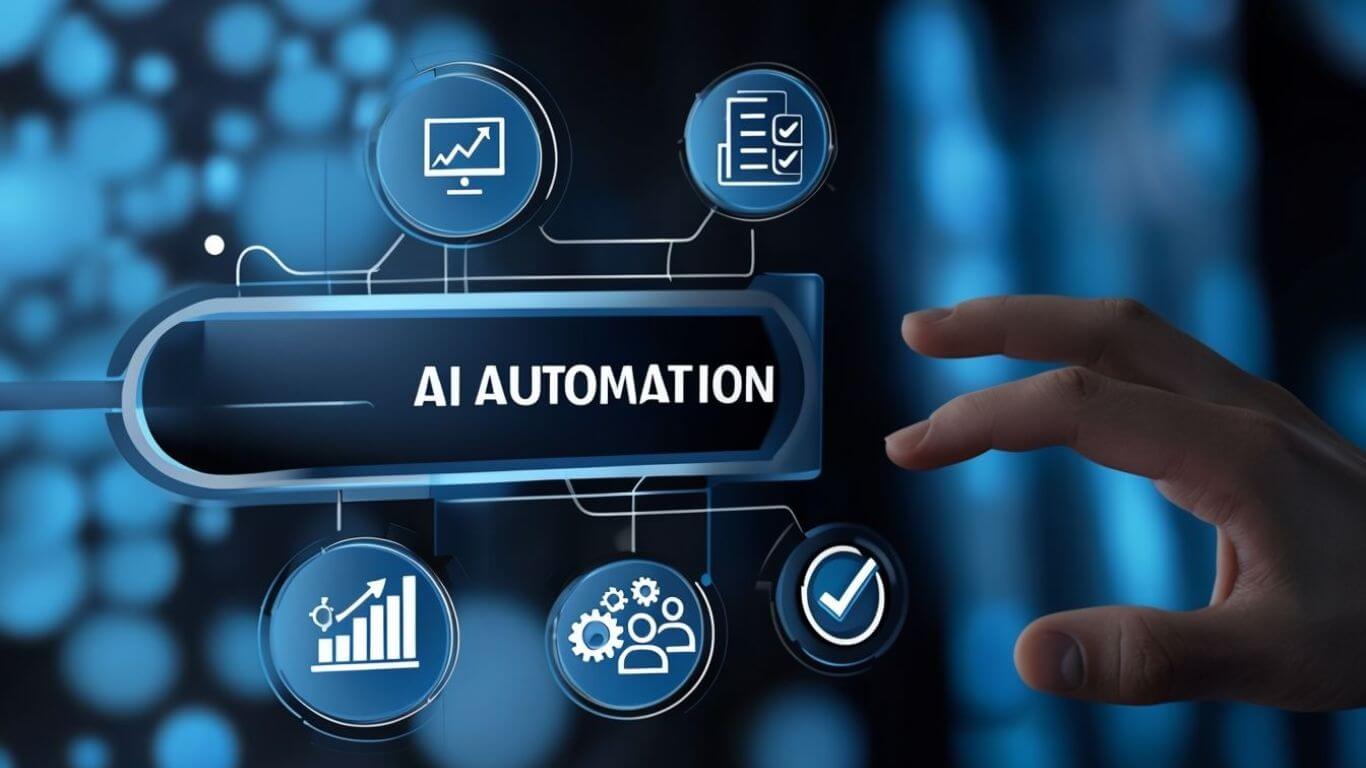
AI-Powered Websites of the Future
Artificial Intelligence and Machine Learning were once thought of as only experimental technologies used by large companies or in research funding labs, but today, using Artificial Intelligence (AI) and Machine Learning (ML) on a website is becoming a business necessity to achieve scalability, automation, personalisation, and a competitive advantage.
Consumers want fast, intuitive, and responsive sites that provide relevant personalisation. Static websites and rule-based systems cannot deliver these requirements. AI-enabled websites learn from user interaction, changing their behaviour based on that interaction, as well as optimising their performance without any input from website operators.
AI is changing the digital landscape; for example, through the development of intelligent chatbots for marketing, recommendation engines for sales, predictive analytics for business decisions, and automating content optimisation for search engine marketing.Therefore, if your competitors use AI-enabled web solutions, you are at a greater competitive disadvantage as your competition uses these solutions to provide superior digital experiences based on data-driven intelligence.
This article provides a complete guide to the integration of AI and ML into Web Development. It covers benefits, use cases, technologies, implementation strategies, challenges, and most importantly, what the future will hold for the integration of AI and ML.
Understanding AI and ML in Web Development
The Importance of Integrating AI and ML into Your Website
Enhancement of User Experience (UX)
One of the ways that AI improves user experience is through the creation of hyper-personalized website journeys for each user. It does this by dynamically customizing the following elements of a website:
Content
Product Suggestions
Call-to-Actions
The result is a significant increase in user engagement/interaction, session duration, and overall conversion rates.
Intelligent Automation
AI-based technologies provide website owners with the ability to automate a wide variety of time-consuming and repetitive activities, including:
Customer Support
Data Classification and Organisation
Lead Scoring
Content Tagging
AI reduces the cost of operations while improving both speed and accuracy in performing these tasks.
Data-Driven Decisions
AI converts large amounts of raw, unstructured data into actionable insights that allow website owners to:
Gain a better understanding of user behaviors
Identify high-value customers
Improve their marketing campaign efficiency
Improve their Product Offering
Scale without Complexity
With the ability to efficiently scale at a far greater rate than the growth of the workforce, this allows website owners to leverage AI technologies without incurring large costs associated with hiring additional employees to perform those same functions on behalf of the website owner.
AI and ML Use Cases
AI Chatbots and Virtual Assistants
AI Chatbots allow your website to offer the following services:
Provide 24/7 Customer Support.
Generate and Deliver "Instant" Responses
Provide Multilingual (Language) Support
Assist with and Qualify Leads.
AI Chatbots can leverage NLP to determine context, emotion, and intent to offer conversations that resemble those of humans.
Personalized Content Recommender and Suggestions
Machine Learning Algorithms allow your website to provide recommendations (and/or suggestions) of:
Products
Articles
Services
Videos
This capability is utilized by most E-commerce Websites, News Portals, and Streaming Services to Maximize User Engagement and Revenue.
Predictive Search & Smart
Step-By-Step Guide for Integrating AI and ML into Your Website
Step 1 - Define Clear Business Objectives
To determine whether AI will benefit your business, you need to determine what it can do for you. For example, you could use it to:
Increase conversion rates by automating customer support.
Create personalized content for your visitors.
Improve search engine optimization (SEO) with machine learning algorithms.
Detect fraud in real-time.
By defining clear objectives for AI solutions, you will ensure that the solutions you use will provide a meaningful return on investment (ROI).
Step 2 - Selecting Appropriate AI Tools and/or Platforms
There are many AI tools to choose from, depending on your business's needs:
TensorFlow
PyTorch
OpenAI API
Google Cloud AI Platform
AWS Machine Learning
When selecting AI tools and platforms, consider the size of the project, budget, and projected use case.
Phase Three - Data Collection & Preparation
To develop and train the ML algorithms effectively, you must collect and prepare the correct type of data. Ensure that a thorough collection and preparation process is developed for your website by following these principles:
Collect user behavioral data: Collect information about how customers navigate and interact with your website.
Utilize high-quality, clean data sets: Ensure that your data sets are accurate and up-to-date.
Compliance with data privacy laws: As with any other data collected, ensure that user data is handled according to applicable laws.
The quality and accuracy of your data will affect how well your machine-learning models perform.
Phase Four - Model Development & Training
As machine-learning algorithms learn from historical data and continue to evolve as new types of user interaction occur on your website, integrate AI & ML into Your Website.Integrate AI & ML into Your Website
Step 1 - Define Your Business Objectives
What do you want to achieve with AI?
Increase your conversion rates
Automate your customer service
Provide a personalized experience for your customers
Boost your SEO ranking
Identify potential fraudulent activity
Establishing clear business goals will help you measure your Return On Investment.
Step 2 Select the Correct Tools and Platforms to Implement AI
There are many AI tools available, including:
TensorFlow
OpenAI APIs
Google Cloud AI
AWS Machine Learning
Azure Machine Learning
Picking the best tool for your business will depend on scalability, budget, and intended use case.
Step 3 - Collect and Prepare Data
To successfully implement AI, you will require quality data. As such, you will need to:
Track how users interact with your website
Ensure that you have a clean dataset
Ensure that your data collection methods comply with data privacy legislation
Accurate data is critical to the performance of your AI.
Step 4 - Develop and Train Models
To create a Machine Learning Model(s), you will use historical data to train your models and continue to refine them through ongoing analysis of new user activity.
The use of AI for each type of website includes:
- For eCommerce websites: product recommendations, dynamic pricing, inventory forecastingand sual search
- For corporate websites: lead scoring, personalized landing pagesand tomated content updates
- For SaaS platforms: user behavior analytics, prediction of churnand commendations for features
- For content-driven websites: topics grouping, generating summaries automatically, and optimizing websites for search engines
The future of AI and Machine Learning for websites will see: hyper-personalization, where websites will be adaptive in real-time to users based on their devices and behaviors; autonomous websites, where updates of content, SEO, and security will be done automatically by AI; the design of websites around AI workflows instead of having static page designs, and interaction of AI witthe ternet of Things and edge computing.
You should strategically invest in AI and machine learning integration because integrating an AI solution is not just a "nice to have" for a business; rather, it is a vital part of a complete and modern digital strategy. Websites that are built with machine learning will experience higher engagement rates, more efficiency, increased scalability, and provide a better user experience compared to those websites that do not use machine learning technology.
As search engines change, users and markets continue to evolve, then websites that use AI will become dominant in the digital ecosystem. Early adopters will have significant advantages in understanding their customers, automating processes (such as generating leads), and enhancing the user's experience through the use of the latest technology in AI and Machine Learning.
Summary: Implementing AI and Machine Learning into websites represents a complete change of direction for businesses.
Share this article
Get More Insights
Subscribe to our newsletter for weekly cloud tips.
Related Articles
View All →
How to Use FTP to Upload and Manage Website Files in a Web Hosting Company
File Transfer Protocol (FTP) is an essential tool for web hosting, allowing you to upload and manage website files efficiently.
Mastering Domain Management: A Comprehensive Guide
Domain management is a fundamental aspect of establishing and maintaining an online presence. From registering domain names to configuring DNS settings and managing renewals, effective domain management ensures the smooth operation and security of your website

Scalability Issues: How to Handle Traffic Spikes Without Crashing
Unexpected traffic spikes can crash your website, costing revenue and reputation. Learn how to scale your hosting, optimize performance, and implement fail-safes to handle surges. Discover CDNs, load balancing, caching strategies, and auto-scaling solutions to keep your site fast and available—no matter how much traffic you get.
Ready to optimize your hosting?
Explore our enterprise-grade hosting plans designed for speed, security, and scale.